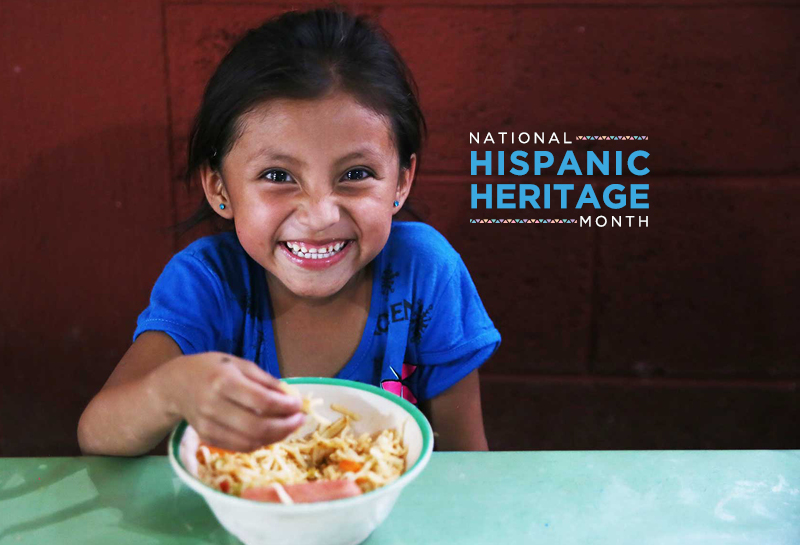
During National Hispanic Heritage Month, Food For The Poor is proud to spotlight team members of Hispanic descent who share our mission to help impoverished people in Latin America and the Caribbean.
Born and Raised in Ecuador, Vivian Borja Is Now a Food For The Poor Executive Helping To Lift Families Out of Poverty and Into Sustainable Livelihoods
Weekly visits to orphanages in Ecuador with her mother and their friends shaped Vivian Borja’s desire to make the world a better place.
“The situation in orphanages in Ecuador was a little dire,” said Vivian, Executive Vice President and Chief Marketing Officer at Food For The Poor (FFTP). “They needed a lot of help. We would go on Saturday and help clean, feed the children, cook, and change diapers.”
Volunteering at the orphanages was personal for Vivian’s mother.
“This work was very close to my mom’s heart,” Vivian said. “And for me, being able to honor her that way was very special.”

Vivian, who was born in Guayaquil, Ecuador, and raised in Quito, the nation’s capital, followed through on her desire to change the world. She earned a degree in International Relations that included studies at the Catholic University of Ecuador and the Ecole Superieure de Commerce de Toulouse, France. After graduation, she worked at the State Department in her quest to become a diplomat.
“That’s how I got my taste for nonprofits because I worked with the United Nations on many projects,” she said. “I was one of the youngest in the Diplomatic Corps of Ecuador.”
That job led to her meeting a former government official and working in his law firm’s marketing department on loan from the State Department.
Vivian had no experience in marketing, but she learned on the job and discovered she enjoyed the process and was good at it. Her mentor noticed her gift for marketing, as well, and urged Vivian to formalize her training by pursuing an MBA.
She took his advice and moved to Miami to study at Florida International University, with the goal of returning home after graduation. She had no idea that her plans would change on the day she sat in class next to a fellow international student.
“He had just arrived from France, and his accent was a bit thick,” she said. “So, I said, ‘Don’t worry, I speak French,’ and that’s how I became friends with my (future) brother-in-law.”
After meeting Christophe, her classmate’s brother, a courtship ensued and culminated in marriage two months after Vivian earned her MBA. The couple made their home in South Florida and, together with their sons, Sebastien and Tommy, created their own mini culture, merging the traditions of their two countries with their shared American experience.
Christophe developed a taste for aji, a hot sauce he requests whenever family visits from Ecuador. Vivian enjoys the vast array of French cuisine – from breads to pastries to cheese and all things in between. She also introduced her family to La Novena, a tradition celebrated in Ecuador from Dec.16 to Dec. 24, the nine days before Christmas, with a different prayer each day.
As her family flourished, Vivian enjoyed a fruitful career in corporate marketing, working for various companies, such as IVAX, Johnson & Johnson, Microsoft, Western Union, and Medtronic and quickly moved up the ranks. Then COVID-19 struck, giving her an unexpected opportunity to reflect on her life’s direction.
“I give God thanks every day for allowing me to have a very successful corporate career, but that period during COVID was the inflection point,” she said. “I thought, ‘How can I apply this experience in marketing to make a positive impact in the world? That’s what I’ve wanted to do since I was a kid – that’s why I studied international relations.”
She eventually found what she was searching for in a LinkedIn post for a Chief Marketing Officer at FFTP.

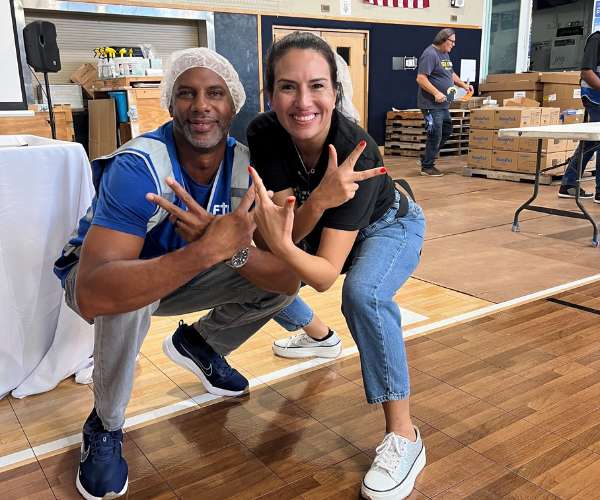
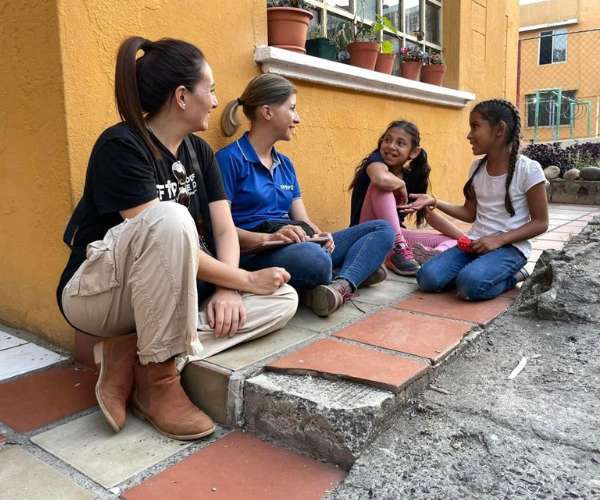
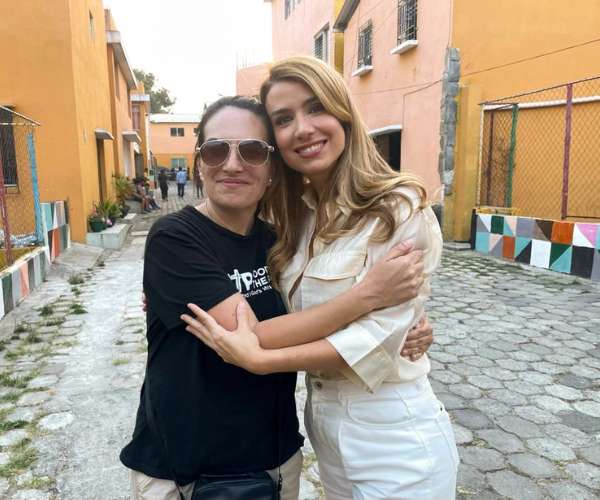


“It really was divine intervention,” she said. “It’s the perfect marriage of all the years of my professional development with my humanitarian and faith components.”
Since joining FFTP in 2022, Vivian has been on mission trips to Honduras and Guatemala. She saw women learning to drive trucks to generate income to support their families, people gaining access to safe drinking water, and families living in solid and secure homes for the first time.
“The work that we’re doing is transforming lives,” she said. “All my senses were awakened to see the beauty of our jobs materialized.”
She hopes to soon go on a mission trip to Ecuador. “I know firsthand the needs and the struggles there,” she said. “I think seeing completed projects in my home country will strike a chord in my heart.”
An Introduction to Christianity Changed the Trajectory of Her Life and Brought Her From Colombia to Food For The Poor
Astrid Cortes, a native of Bogota, Colombia, loved attending parties and dancing but kept her distance from drugs, alcohol, and bad behavior. Curious by nature as a teen, Astrid was always seeking to know why things had to be a certain way, including within the confines of her Catholic faith, and rarely was she satisfied with the answers she received.
During her first year of college, a friend from high school, who attended a Protestant church, invited her to morning prayer and later to be part of her church youth group.
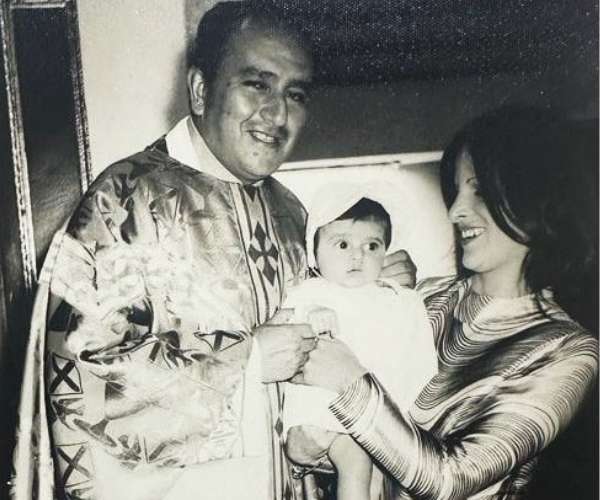
“And that’s when everything changed,” said Astrid, Director of Sustainable Livelihoods at Food For The Poor (FFTP). “For the first time, I saw a way to get answers to all my questions about God and the Bible.”
She began attending her friend’s church and Bible study classes based on the teachings of the Campus Crusade for Christ, now known as Cru.
“It created a foundation in my life that has stayed forever and helped me through difficult times,” she said. “So that’s a defining moment in my life.”
Astrid enjoyed courses on alleviating poverty and ending social injustice, which fit perfectly with her Christian desire to make the world a better place.
Two years after earning her undergraduate degree, Astrid decided to become a missionary, believing that was the best way to pursue her dream of being a change agent in the world. She used the money she was saving for a European tour to go to the United States to learn English, which would be helpful in her life as a Campus Crusade for Christ missionary.
Astrid moved to Florida and immersed herself in American culture and her quest to learn English. She had a change of heart about her career path after discovering that missionaries must fundraise to cover their salary, benefits, retirement, and expenses.
“I’m more of a tent maker, like (the Apostle) Paul,” she said. “He was making tents and selling them, instead of asking people for money to support him. I can ask for money to help others, but not for me.”
She enrolled in an MBA program to maintain her student visa and continued living in South Florida. After graduation, she dedicated herself to volunteering at church and working in international development as a consultant, specializing in food security, development, research, and program evaluation. Her work took her to Latin America, Asia, and Africa.
Along the way, she met fellow Christian Todd Harris from South Bend, Ind., and their relationship blossomed.
“We’re known as the gringo and the Colombian, and we joke about that,” she said. “He loves my country, too.”
Todd became so enamored with the country that the two decided to get married in Cartagena and set their wedding video to the music of Colombian singer-songwriter and actor Carlos Vives.
“Now, he eats rice and beans, so the food is a huge part of me sharing with him,” she said. “During soccer games, he wears his Colombian T-shirt, of course.”
Astrid became acquainted with FFTP while working at a small research firm with the charity as one of its clients. Eventually, she decided to run her own business but soon found working solo difficult without sufficient contacts, so she entered the job market again.
Astrid joined FFTP in October 2017 and never looked back. Two years ago, she represented FFTP in Colombia when the charity received the Rafael García Herreros Order of Social Merit, named after the founder of Corporación Minuto de Dios. The award was presented by Father Diego Jaramillo, president of Minuto de Dios, during a ceremony in the House of Nariño, the Presidential Palace of the Republic of Colombia. Dr. Iván Duque Márquez, then the president of Colombia, was among the speakers at the event.
“It was a huge honor,” she said. “It was on national TV, and my mom got to see it before she died.”
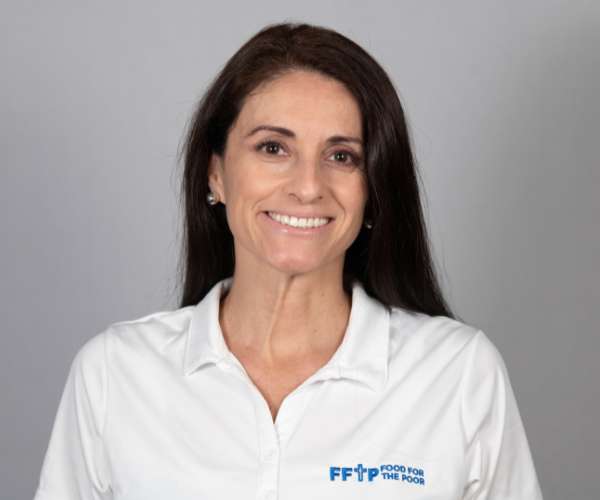

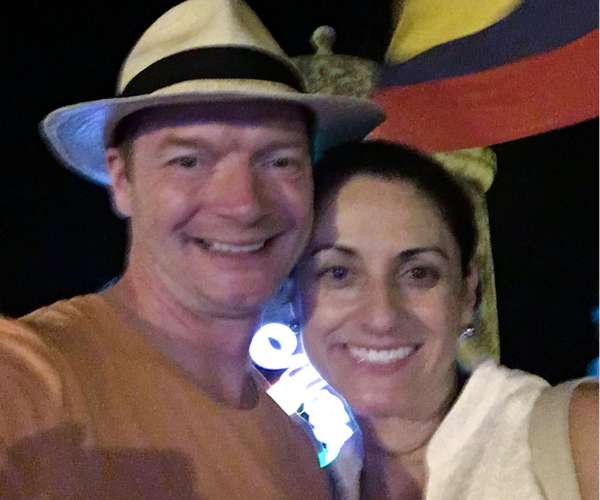
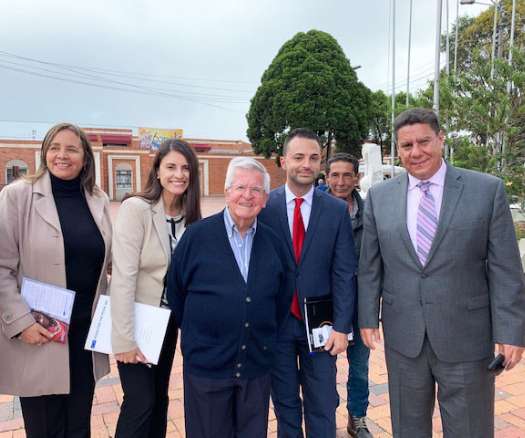
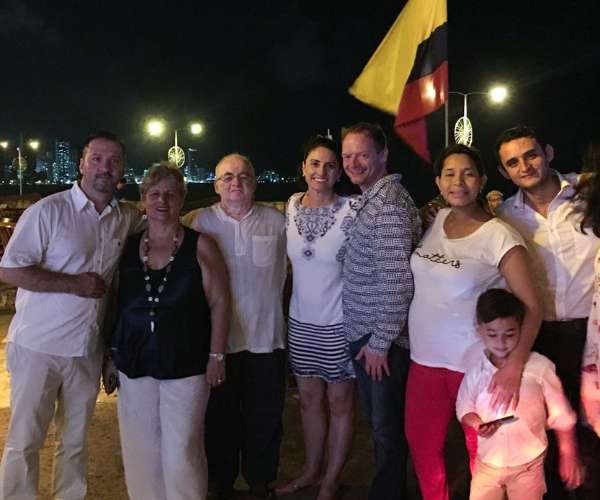
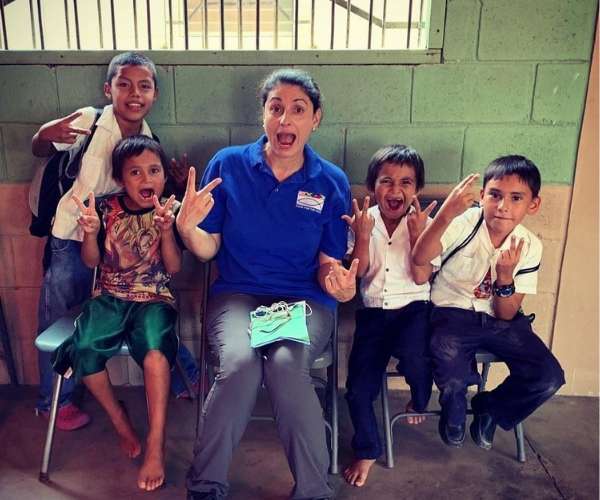
Astrid is immensely proud to work with a charity that helps the less fortunate in Latin America and the Caribbean – especially her beloved Colombia – and she’s grateful that it allows her to fulfill her Christian faith.
“When I became a Christian, I wanted to serve God and do my part to make the world a better place, but I didn’t know how, because they told us that if you want to serve God, you have to be a missionary or become a pastor – that’s why I initially wanted to be a missionary,” she said. “But I learned that you serve God wherever He places you. Whether you’re a missionary, a doctor, or a teacher. That was another defining moment in my life.”
FFTP Team Member Cherishes Family and Ministering to Others
A 10th-generation Mexican American, Deacon Frederico Garza sees himself as a stepping stone in his family’s transition from poverty to prosperity.
“It wasn’t poverty on the scale of what we see in Latin America and the Caribbean,” said Deacon Garza, an Episcopal Deacon and Church and Ministries Relations Advisor at Food For The Poor (FFTP). “But it was poor for the United States.”
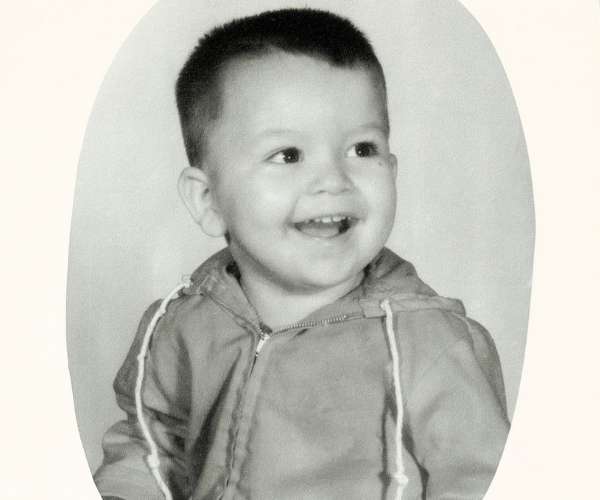
Deacon Garza’s family moved from Mexico City to Santa Fe, N.M., in 1693, while it was still part of Spain. He was born more than two centuries later and grew up in Clovis, N.M., during a time when discrimination against Mexican Americans was frequent, and his family struggled to make ends meet. He recalls visiting his grandparents and having to bathe on their porch in a galvanized tub with water heated on the stove. His family’s financial standing improved when his father went to trade school and became a welder.
When he was 18, Deacon Garza took a few college classes while working as a rock shoveler at a rock-crushing plant. He left the job and college when his pay was cut as part of a union settlement and found work as a janitor at a semiconductor factory that produced computer chips. He worked his way up to machine operator, trainer, engineering technician, and finally engineering manager.
Decades after shoveling rocks to make a living, Deacon Garza is the proud father of three daughters with college degrees – including two with master’s in their chosen fields.
“On one side, I can reach back and touch a generation that didn’t have indoor bathrooms or indoor plumbing,” he said. “And on the other side, I can touch generations with advanced degrees. I’m just a stepping stone, a rung in the ladder – it’s amazing to be able to see the transition within my own family.”
Deacon Garza entered the ministry after a dark period in his life. He had previously moved with his family to Richmond, Va., hoping to rebuild his marriage after problems in New Mexico. Ultimately, the marriage did not survive, and Deacon Garza found himself alone in Richmond. His life went into a tailspin that pushed him to the wrong side of the law, landing him in jail and a period of deep introspection.
“That was my wake-up call,” he said. “That’s when I turned my life over to Christ.”
When he got out of jail, the introspection continued as he worked with mentors and shared his message of hope to others in need.
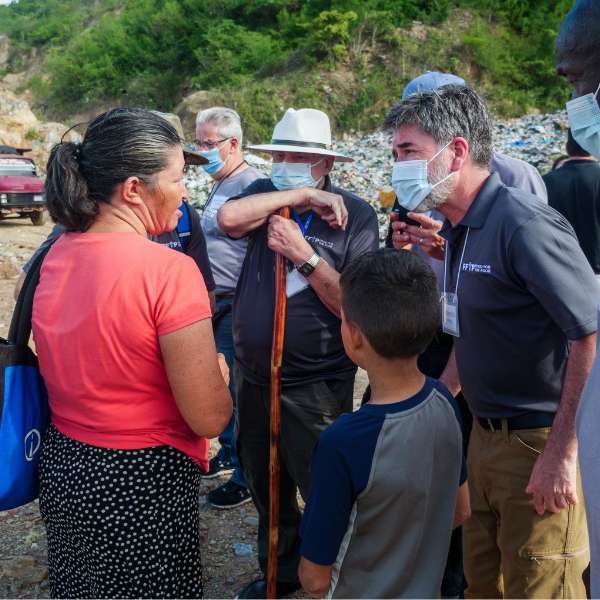
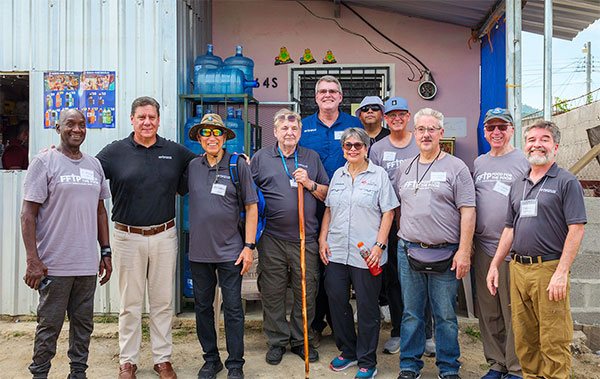
“I started doing prison ministry at a maximum-security prison, and I started going to jails to minister there,” he said. “I would spend the night in homeless shelters and food kitchens. I found relief – I found healing in these places.”
As fate would have it, he was recruited by the Episcopal Diocese in Richmond, which was seeking diaconate (order of deacons) candidates already ministering to people seeking redemption and restoration. After completing his training, he was ordained and assigned to St. Phillips Episcopal Church in Richmond, where he remained for eight years.
Deacon Garza learned about FFTP when one of the charity’s clergy speakers visited St. Phillips to share the charity’s mission. By then, he was remarried and operating a fledgling digital agency that tapped into his earlier experience at the semiconductor company.
Deacon Garza’s business was struggling. He and his wife were barely able to pay tithes to St. Phillips, not to mention their bills, but they were moved to make a monthly donation to FFTP.
“The stories he told grabbed me by the heartstrings,” Deacon Garza said. “I thought, ‘You know, we can at least pay $20 a month. If we can’t figure out how to do that, I’ll go out and hustle $20 worth of work to pay for this.’ So that’s what we did.”
About two years ago, he found himself at a crossroads. As much as he loved St. Phillips and the congregation, he needed a change, so he decided to take a six-month sabbatical. That’s when he learned that FFTP was recruiting for clergy speakers. Fate once again stepped in, and he was hired shortly after submitting his application online.
Deacon Garza recently returned from Honduras on his first FFTP mission trip. While he was moved by the homes and schools the charity builds to help people in need, it was the income-generating projects, such as fishing villages that help lift families out of poverty, which truly inspired him.
“What excited me the most was how the people move from a sense of hopelessness to a sense of knowing that they will be able to support themselves,” he said. “Food For The Poor is helping people to discover their self-confidence and realize that, with the right tools, they don’t need us to help them.”
He’s also delighted that FFTP is working in the country of his family’s origin.
“It’s incredible,” he said. “I pinch myself that I get to be in an organization that helps so many people – and helps my people.”
Born in El Salvador, Her Heart Extends to All the Countries Where FFTP Helps
A photo from Sandra Chavez Quan’s childhood captures a special memory of her life in El Salvador before her family relocated to the United States.

Taken during a party for her little brother’s first birthday, 5-year-old Sandra is beaming as she prepares to swing at a piñata, trying to be the one who releases the goodies inside.
“Everyone who wants a turn gets a turn if the piñata holds,” she said.
For Sandra, Administrative Manager of the Projects Department at Food For The Poor (FFTP), it’s one of the special moments where the culture of the land of her birth intersected with a family celebration.
Like her mother and her siblings, Sandra was born in El Salvador, but their roots are traced back to China. Her father moved from China to El Salvador where he met her mother, whose parents were also from China. The two married and raised a family and for years operated two businesses, selling buttons, lace, and notions that customers used to make clothing. All the while, they held on to their Chinese culture.
“We really had more of an Asian upbringing,” Sandra said. “There was a huge community of Chinese residents, a subculture in the country.”
Their traditions included following the lunar calendar in celebration of holidays and major events. She fondly recalls celebrating the Chinese New Year, when gifts of money are given to children in beautiful bright red envelopes to symbolize good wishes and luck for the year ahead.
When she was 13, Sandra’s parents made the decision to leave El Salvador in search of a better life. The family moved to Hattiesburg, Miss., and Sandra immersed herself in her studies.
“I learned English just by being in school – it didn’t take long – younger people learn and adapt quickly,” she said. “I actually liked going to English class, and I was doing better than most students, which was just a matter of applying myself.”
Sandra briefly attended the University of Southern Mississippi before transferring to the University of Nebraska, where she earned her bachelor’s degree. After graduation, she worked for the State of Nebraska in its Workforce Development Division and later in real estate. Eventually, she transitioned to hotel management and relocated to Coral Springs, Fla., a few miles away from Coconut Creek, the site of FFTP headquarters.
When the hotel management company closed its Coral Springs office, Sandra took a friend’s advice and applied for a job at FFTP, where she was hired to work as a coordinator in the Projects Department.

As a coordinator, she read testimonials of FFTP beneficiaries and reviewed heart-wrenching photos of makeshift homes where people lived before receiving new homes funded by FFTP donors.
“When I first started, I reviewed the project proposals and final reports,” she said. “It was part of my job to go through them and – to see the before and after of what we accomplish, to know everything that we do – it’s just amazing.”
Today, five years after joining FFTP, she still finds it gratifying to be part of an organization that not only serves in the place of her birth, but also in other countries that need assistance on a path to sustainability.
“To me, it’s not about a specific country – they’re all my countries,” she said. “Honduras, El Salvador, Central America, they’re all my countries and all my people. The work is very rewarding.”
Love and Marriage Brought Her From Guatemala to Florida and FFTP
For Maricarmen Anguiano Jacobs, working at Food For The Poor (FFTP) is part of a love story that began in 2020 in Guatemala and continues in South Florida where she now lives with her new husband.

Maricarmen, who joined FFTP as a volunteer in December 2022, started her new position as the charity’s Community Engagement Coordinator on Sept. 25.
She previously spent nine years working with Caritas Arquidiocesana, FFTP’s in-country partner in Guatemala, where she most recently was Institutional and Hospital Administrator at Children’s Hospital Juan Pablo II. During her tenure, she frequently collaborated with FFTP team members in the charity’s Coconut Creek, Fla., headquarters.
She met her future husband, Paul Jacobs, FFTP Radio Manager/On Air Fundraiser, in January 2020, while he was on a mission trip with radio station partners seeking to learn more about the charity’s work in Guatemala.
Born and raised in Guatemala, Maricarmen learned English as a teen while visiting her aunt in California. That skill made her the perfect stand-in for a colleague at Caritas who was unable to fulfill her role as a translator for the FFTP visitors from the United States.
During the mission trip, an unanticipated friendship developed between Maricarmen and Paul. Over time, their connection strengthened via chats on FaceTime, with each conversation ending in prayer.
“I think there’s something valuable about having a relationship in two different countries because you get to talk, share your thoughts and your story,” she said. “And it was a friendship based on God, which was even more special.”
Maricarmen moved to South Florida in December 2022 and subsequently became an FFTP volunteer. Three months later, she and Paul made their union official on March 3, 2023, exchanging vows in a ceremony in Kendall, Fla., before family, friends, and colleagues.
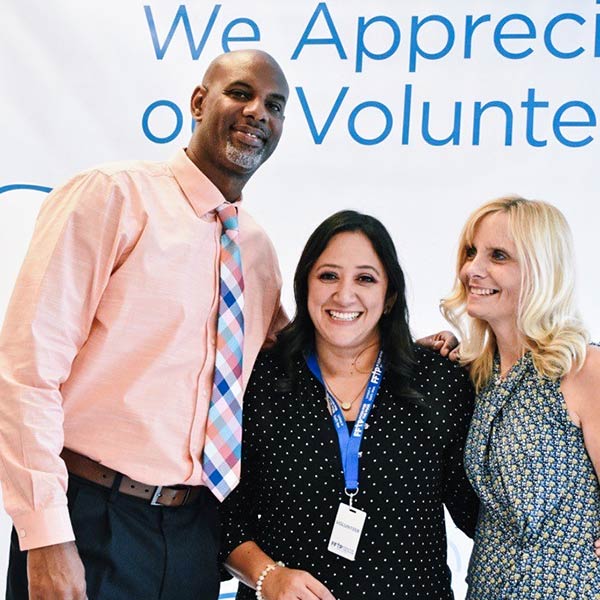
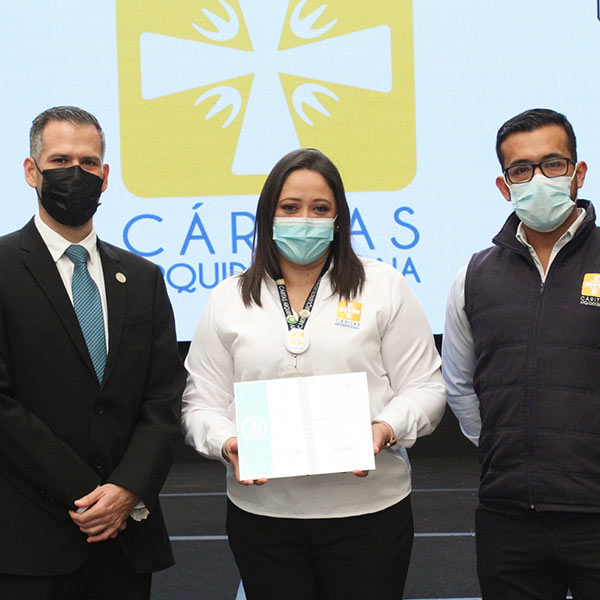
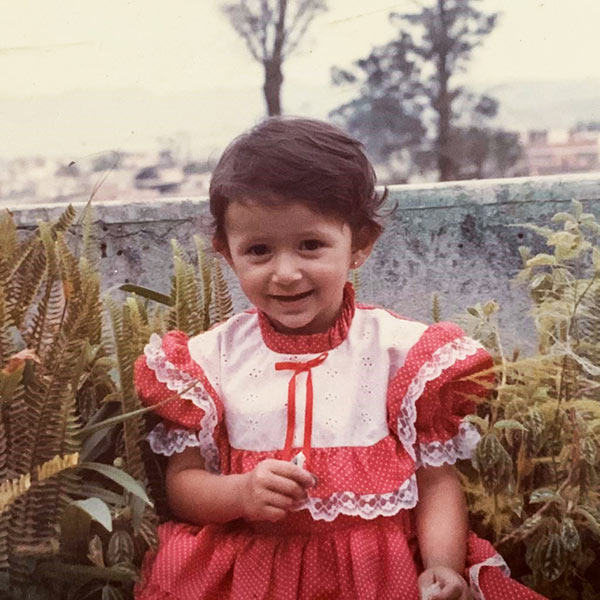

Since moving to South Florida, Maricarmen has been part of a cultural exchange with Paul and his father, who are of Jamaican descent. She’s developed a fondness for spicy Jamaican beef patties, while her husband and father-in-law have had the pleasure of eating mole, a delicious Guatemalan dessert made with plantains and chocolate. With Maricarmen’s encouragement, Paul has developed a great appreciation for black beans and the variety of ways the dish can be prepared – even as a dessert.
Looking back on how she met Paul, Maricarmen reflects on the other gift she received when she volunteered to serve as translator for the Americans visiting her country. It opened her eyes to the plight of the people in Guatemala who live in poverty.
“I got to see the reality of poverty in my own country – maybe an hour away from my office,” she said. “People living in homes that are only 2-by-2 meters (6.56-by-6.56 feet) in size, pregnant women getting up at 3:30 in the morning and walking two hours to get water, it was incredible. We take everything for granted and don’t realize how blessed we are.”
She’s happy to be part of an organization that is helping impoverished people in the country of her birth, and she is humbled by their resiliency, even in the face of their day-to-day challenges. “They lack so many things, but they are not lacking in faith,” she said. “They had this joy about God and trust in God. That is what was transforming for me.”
Andrea Delgado Enjoys a Purpose-Driven Job That Touches People in Her Family’s Homeland
When work slowed down during the COVID-19 pandemic in 2019, Andrea Delgado took a break from the hospitality industry to help market her father’s window treatment business and to do a bit of introspection.
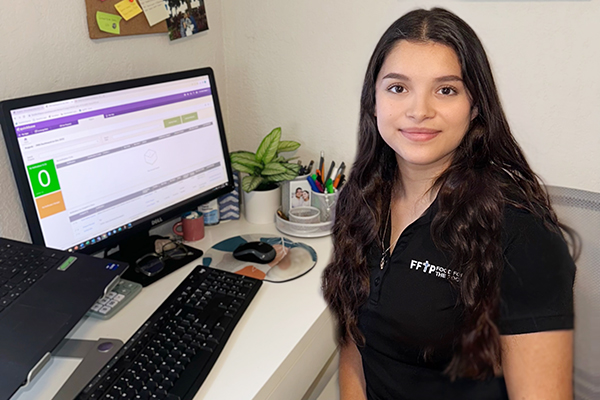
“I was taking my time to find something more meaningful,” she said. “I wanted to find work that would make me feel like I had a purpose.”
Andrea found that sense of purpose at Food For The Poor, initially as an administrative assistant in the Donor Relations Department and later as an assistant in the Projects Department, where she sees firsthand the impact of the charity’s work.
“It’s a great organization,” she said. “I’m so honored to play even a small role in the work that we do at Food For The Poor. I really do see the difference that we’re making in people’s lives.”
Andrea is especially proud of the work that FFTP is doing in Ecuador, the place where her parents were born and where she frequently visits her grandparents and extended family. Although she was born in Fort Lauderdale, Andrea’s family lived in Manta, Ecuador, from the time she was 5 years old until they returned two years later.
“There was a family gathering every week with lots of food and music,” she said. “We felt closer to everyone over there. Everyone knows all the neighbors and it was just a different experience.”
Andrea also recalls seeing impoverished families in Ecuador and not fully understanding their plight. She saw children her age wearing torn shoes or no shoes at all and wondered why they didn’t have decent shoes like the ones she wore, and she saw homes patched together with little more than bamboo sticks and palm fronds.
“I remember seeing houses made of bamboo with leaves on the roof and thinking, oh cool, it’s a bamboo house,” she said. “But when I grew up, I realized that when it rains, it goes into their homes and the leaves on the roof didn’t last very long. I was sad when I began to understand they were living in poverty.”
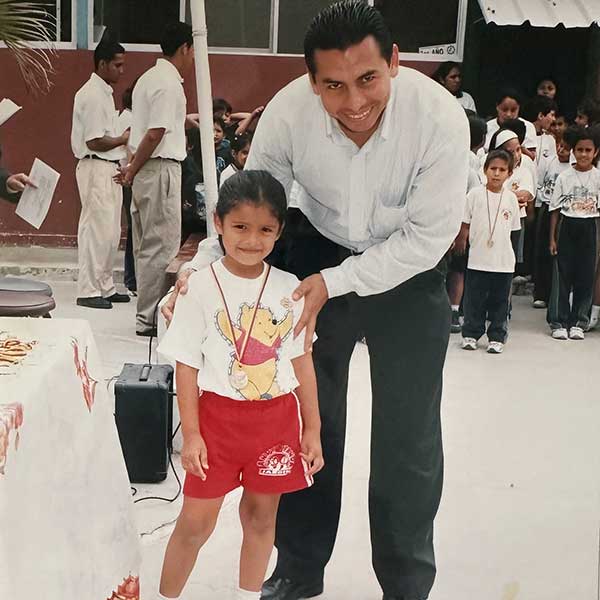
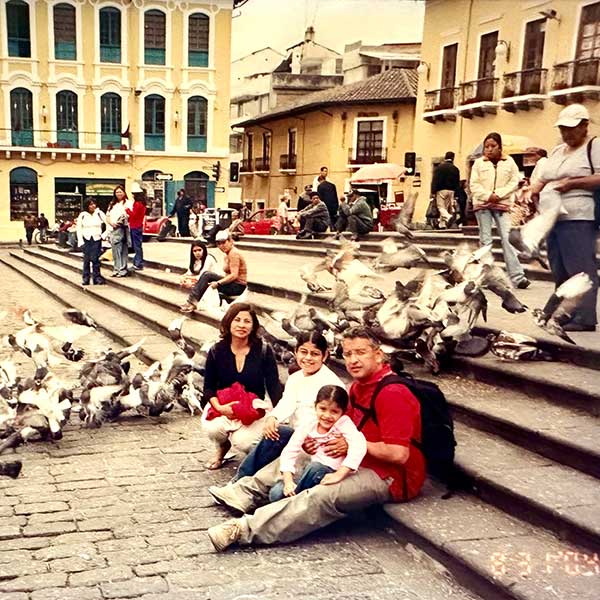
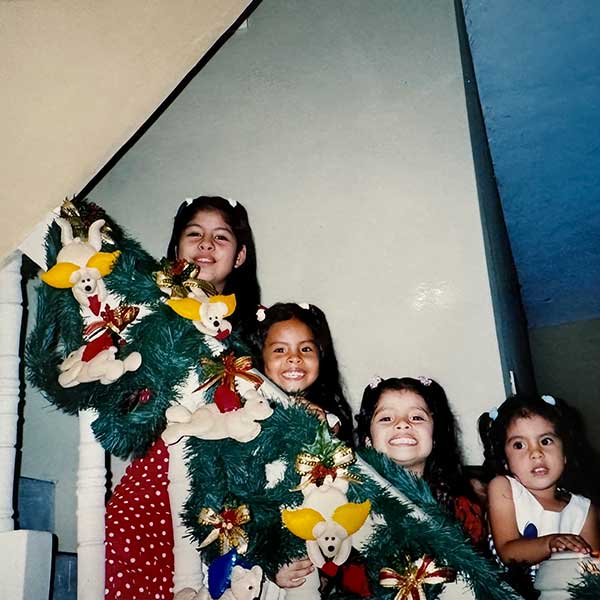
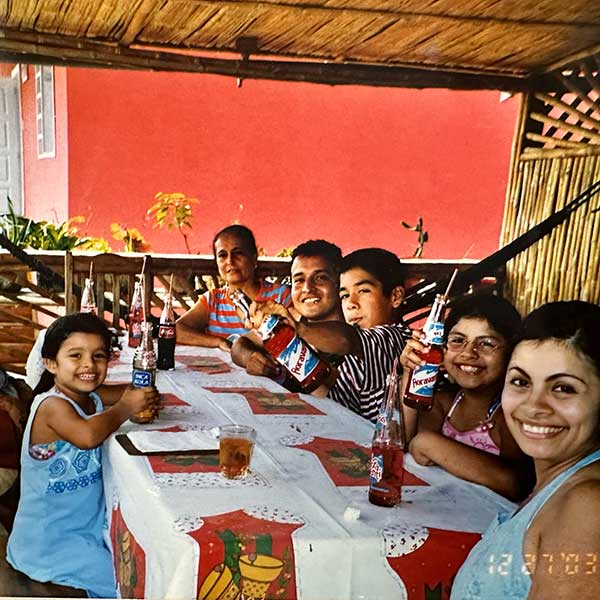
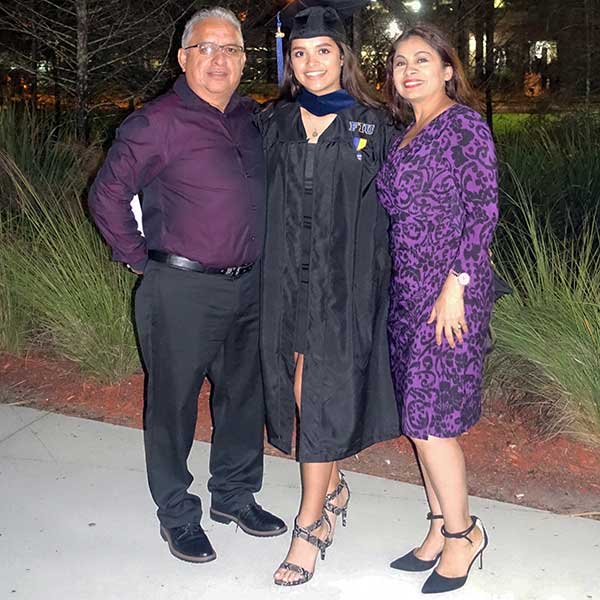
Believing that Andrea and her sister, Emily, would have access to a better education in the United States, Andrea’s parents moved their family back to Fort Lauderdale, bringing with them a bit of the culture of their Ecuadorian roots. Her father’s ceviche and her mother’s tres leches cake were among the dishes they enjoyed in their new home, which was filled with traditional music and the language of their country.
“We would always speak Spanish at home, so we’ve never lost the language,” she said. “I’m glad that I still know the language, and when I have kids, I want to follow that tradition.”
It was her family’s faith in God and their conviction to always work hard that set both Andrea and her sister on a path to higher education and to successful careers. Andrea’s parents were not aware of FFTP until she began working with the charity and shared details about its mission.
“They were very proud of the work that we do,” she said. “And when I told them it’s a faith-based organization, they were very happy.”
Becoming a Food For The Poor Project Manager Brought Eli Kuan Back Home to Guatemala
For Eli Kuan, landing his dream job at Food For The Poor (FFTP) came through a series of twists and turns that launched him on a journey from his birthplace in Guatemala to South Korea and Haiti before he returned home as an FFTP Project Manager.
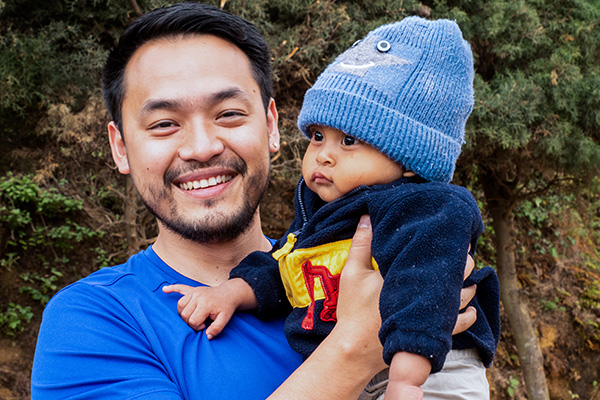
After earning his undergraduate degree in Guatemala, Eli wanted to pursue his master’s degree, but his family couldn’t afford the tuition. An online ad announcing a three-year scholarship to study in South Korea, provided the opportunity.
He spent his first year in South Korea learning the language, and then began his studies while working at a nonprofit aid organization. After earning his degree, he embraced an opportunity to transfer to his company’s office in Haiti, where he discovered FFTP and dared to dream that he might someday work for the charity.
Eli worked in Haiti as a project manager for two and a half years, along the way learning Creole and building relationships within the community. Although times were challenging, he enjoyed his life in Haiti until the assassination of President Jovenel Moïse, which gave rise to unprecedented gang-related violence.
“There was a shoot-out in front of my house,” he said, “I saw my wife’s face and she was scared, and I thought to myself, we can’t do this anymore. The following morning, I submitted my resignation.”
He had little luck in his job search until his wife heard from a friend who was representing FFTP in its search for a project manager in Guatemala. Seeing this as divine intervention, Eli applied for the job and received an offer.
Then Haiti was struck by a magnitude 7.2 earthquake. At the time, Eli was the only person in his office authorized to organize emergency assistance. He felt compelled to stay.
“I said to my wife, ‘Call me crazy, but I cannot leave these people when they need us the most,’” he said. “I called (FFTP) and said I know you have other candidates, go ahead with someone else because I need to stay.’”
To Eli’s surprise, the charity waited for him to finish his work, and one month later he returned home to Guatemala and began his new job.
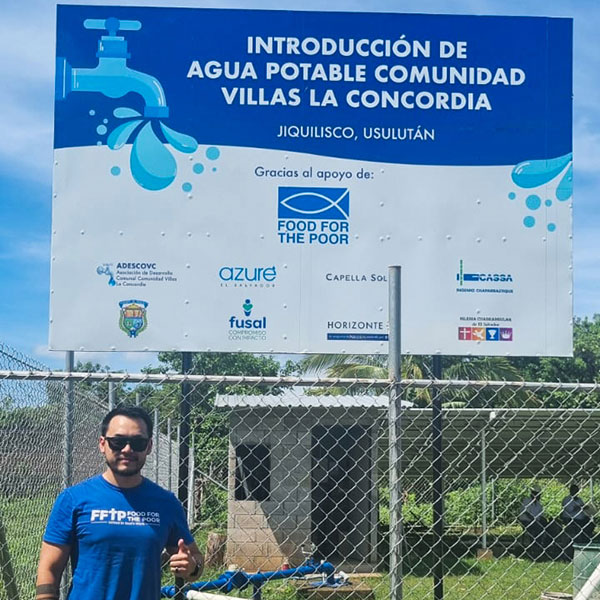
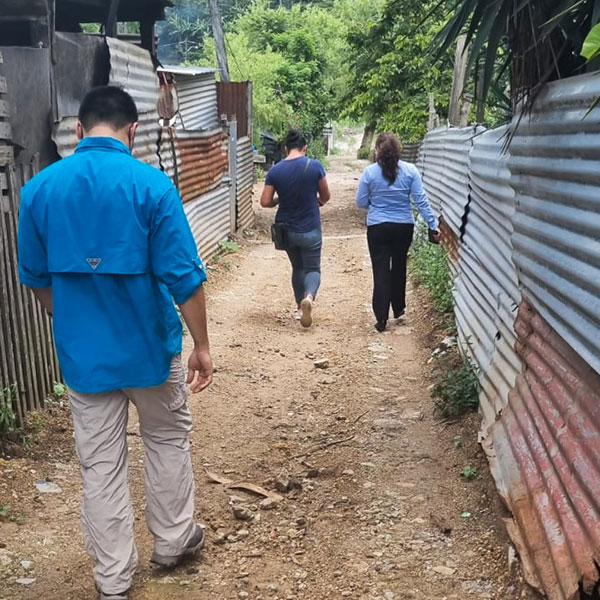
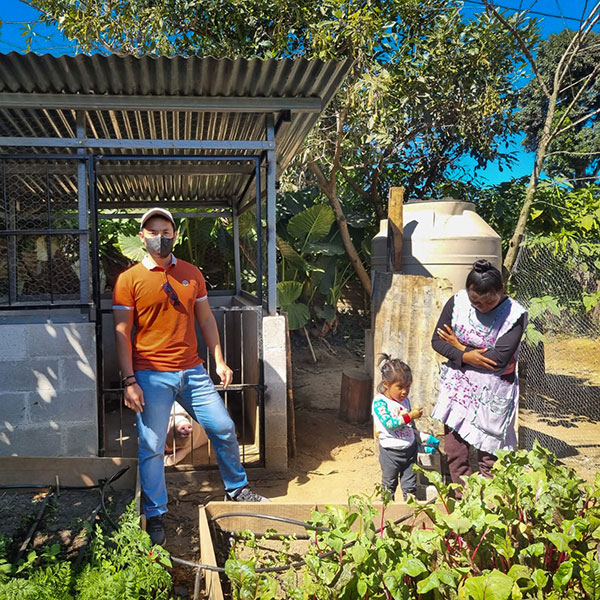


“For me to be able to make a difference in Guatemala through Food For The Poor, through our donors, it’s a joy, it’s happiness,” said Eli, who also manages FFTP projects in El Salvador and Mexico. “It’s an honor for me to help implement solutions to make people’s lives less of a burden. I love the idea that we are striving toward sustainability and community development because we’re thinking about structural change.”
The work has become more personal, as his family and friends have grown to understand and support his work. He’s also been embraced by the families he’s helped along the way – even becoming a godfather to a newborn baby whose mother had given birth just before her family received a home from FFTP. “In a symbolic action they wanted to make me the boy’s godfather and, of course, I agreed,” he said. “I want them to know that I am there for them, to help them, because that’s the truth.”
Family, Cuisine, and Cultural Traditions Maintained His Connection to Colombia
Juan Viveros was 5 years old when his family left Colombia, but the connection to the nation of his birth remained strong. “Even to this day, I still dream and think in Spanish.
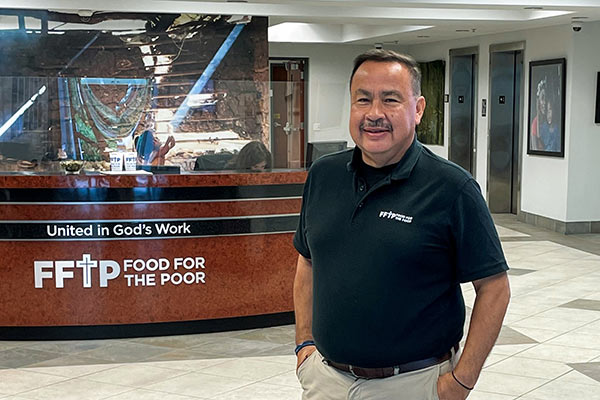
Juan grew up in the richness of Colombian tradition. Throughout his childhood, Juan spent summers with his family in Colombia, spending time outdoors on his family’s farm and immersing himself in the culture.
“I might spend three months of summer vacation in Colombia, and I had a blast,” he said. “I loved it. Juan also enjoyed growing up in New York, where his constant contact with aunts, uncles, and cousins in the neighborhood built strong family ties and maintained his connection to Colombia.
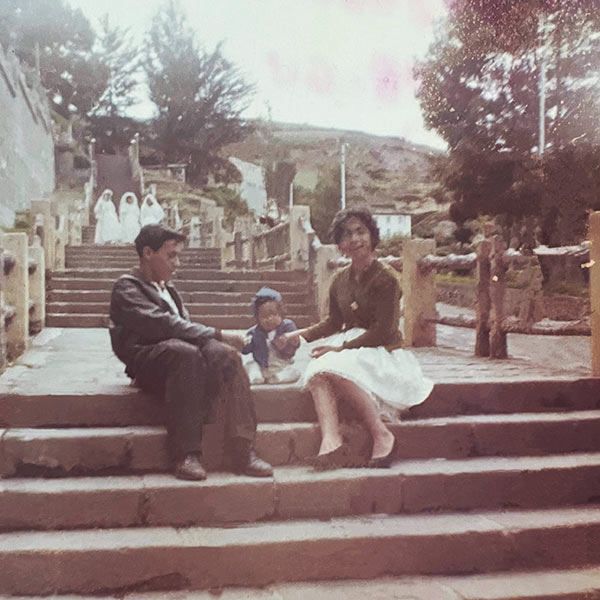
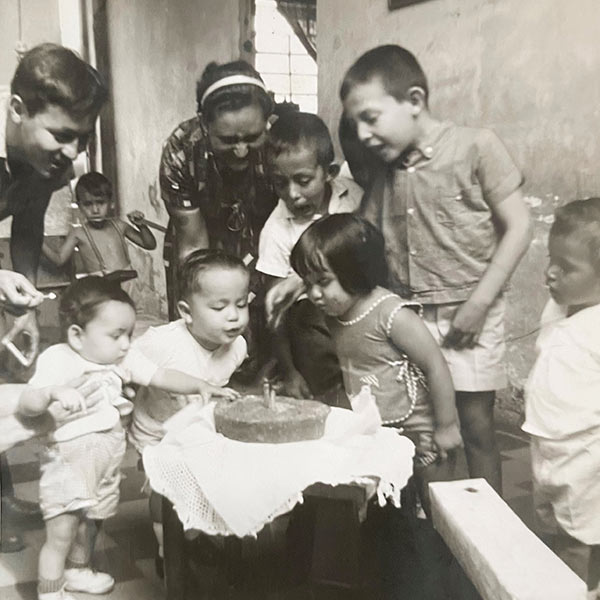
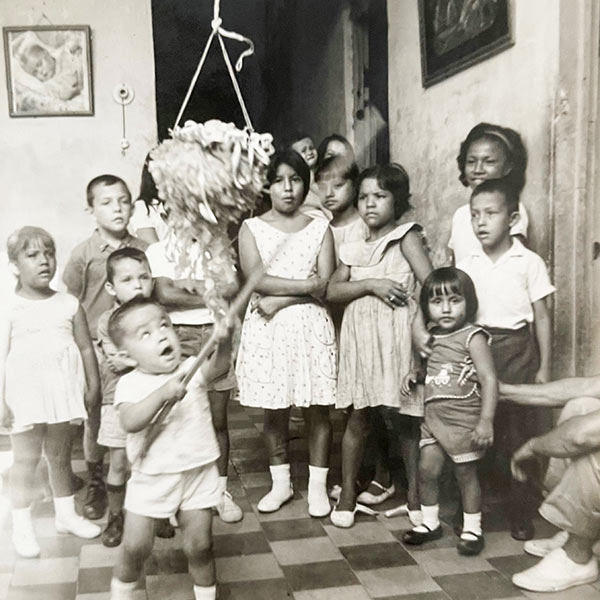

“We grew up with all the Colombian traditions and the cooking and the parties and the soccer games – whenever Colombia was playing on television, they had to see the soccer games,” he said. “But I think it’s mainly the food, the traditions and holidays like Christmas and Día de Los Reyes (Three Kings’ Day). We didn’t open all our gifts on Christmas. We always saved gifts to open on Día de Los Reyes, which we celebrated on Jan. 6.”
Juan’s ties to the food of his heritage are so strong that even his wife, Debby, born in Philadelphia, Penn., embraced the culture by learning to make the foods he loves.
“My wife makes amazing empanadas and delicious arepas,” he said. “I love lentils. I could eat lentils every day of my life, and Debby does great Colombian-style lentils. Our family of four boys, three daughters-in-law, and a granddaughter enjoy Colombian food.”
After graduating college and having a successful career in business in the cruise and travel industry, Juan joined Food For The Poor two years ago, working for the first time as a fundraiser.
“I love the people we work with – our in-country partners, our donors,” he said. “And I really like helping Colombia and all the countries we serve. I know the conditions these people are living in – zinc roofs and dirt floors – and I love that we can help them with the support of our donors.”
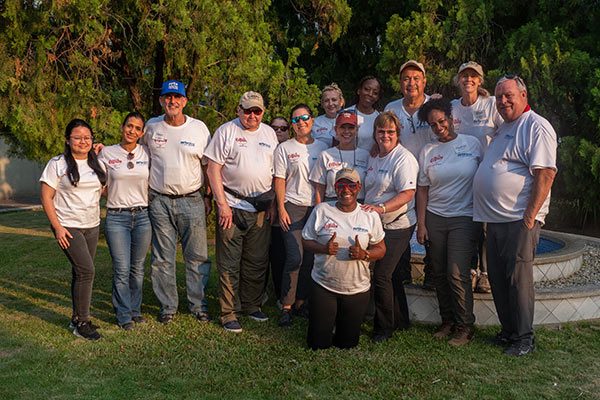
FFTP is celebrating National Hispanic Heritage Month with a Facebook challenge and inviting everyone to join a special Facebook group where you can participate in fun and engaging posts about Hispanic culture. Additionally, there is the option to join in with fundraising for Latin American children. Click here to join the challenge.